

INTRODUCTION
The world is facing a growing climate crisis1, and a similar environmental threat is emerging from pharmaceutical contamination, with drugs increasingly entering ecosystems and food chains2. Awareness is increasing worldwide about the ecological harm caused by pharmaceuticals and their by-products3. Many drugs are persistent and resistant to degradation, allowing them to accumulate in the environment and potentially re-enter the human population4,5. After therapeutic use in humans and animals, many pharmaceuticals enter the environment, where long-term exposure can cause chronic toxicity, endocrine disruption, microbial resistance, growth inhibition, cytotoxicity, mutagenicity, teratogenicity, and other adverse effects in plants and animals6.
Pharmaceutical quantities between ng/L and µg/L are routinely reported in aquatic bodies, and sewage treatment plants have been identified as a primary pathway for this release7,8. Pharmaceuticals are effective at very low concentrations and can therefore disrupt the biochemical and physiological functions of aquatic organisms throughout their life cycle, underscoring the urgent need to assess environmentally relevant compounds despite limited data on their occurrence, bioaccumulation and ecological effects9. Aquatic organisms rely on waterborne infochemicals for communication, feeding, reproduction, and predator avoidance10. Pharmaceutical residues can interfere with these signals even at low concentrations, and these contaminants are difficult to remove during wastewater treatment; they persist and accumulate in aquatic ecosystems10. Growing environmental contamination has led to increased research on the behavioral effects of pharmaceuticals, which pose a significant risk to aquatic species by accumulating in their tissues and altering their behavior11.
According to previous studies, painkillers (NSAIDs), antimicrobials, antiepileptics, antidepressants and anticancer agents have been researched the most in relation to environmental pollution12-14. A few studies are also collating data on cardiovascular and anti-diabetic medications13. However, other potentially ecotoxic therapeutic classes which are sold as ‘over-the-counter (OTC) drugs’ (i.e. medications that are directly sold to an individual without a prescription) have not received much attention, despite being extensively utilized worldwide15-19.
Although different countries have formulated their own guidelines for classification, regulation and use of OTC drugs, some classes commonly utilized by majority of the countries include analgesics and antipyretics, antidiarrheals, antacids and indigestion remedies, antiemetics, anti-allergics, cough and cold remedies, vitamins and minerals, topical steroids, laxatives, hormonal contraceptives, antiseptics and disinfectants, topical antifungals, skincare products, piles and warts remedies, and ophthalmic products15-19. As a general rule, an OTC drug is proven to be reasonably safe and well tolerated for human consumption16. Unfortunately, these drug classes are also implicated in rampant self-medication (and even self-dosing) globally, thereby exacerbating the problem of their potential bioaccumulation20. Long-term bioaccumulation of such drugs in tissues of organisms may lead to unpredictable consequences on ecosystems9,16. Therefore, the aim of this research study was to conduct a systematic review and summarize the characteristics of toxicity caused by common over-the-counter drug classes on aquatic organisms.
METHODS
Study design
This was a systematic review of all original studies evaluating the environmental toxicity of one or more OTC drugs.
Study registration
A preliminary literature search was conducted in MEDLINE via PubMed, Cochrane CENTRAL and PROSPERO to look for any review with the same research question and objectives. After ensuring no such publications or registrations, a systematic review protocol was written and registered in Open Science Framework as it was not eligible for registration on PROSPERO due to lack of clear relevance to human health21. The standard PRISMA checklist was followed for the design, implementation, and reporting of this study.
Study population
The inclusion criteria were defined using the PICO framework: Population (P) - any aquatic species used in experimental toxicity assessments; Intervention (I) - exposure to one or more OTC pharmaceutical drugs; Comparison (C) - unexposed or control conditions, or baseline toxicity measurements where applicable; and Outcomes (O) - any reported ecotoxicological effects attributable to OTC drug exposure. Accordingly, original research articles published in English up to December 2024 that investigated the toxicity of OTC pharmaceutical drugs in aquatic organisms were included in the study.
Studies were excluded if they focused solely on the presence or environmental concentrations of pharmaceutical contaminants without evaluating or describing toxicity characteristics in aquatic organisms, as they did not address relevant biological endpoints. In addition, drug classes that may be sold as OTC medications in certain regions but do not represent conventional allopathic OTC drugs, namely herbal products, traditional medicines, and homeopathic remedies, were excluded from this review to ensure pharmacological and regulatory consistency with conventional OTC drugs. Furthermore, non-primary research and non-full-text publications, including book chapters, conference abstracts, commentaries, editorials, expert opinions, narrative reviews, and perspective articles, as well as studies not published in the English language, were also excluded due to a lack of original data and challenges in standardized quality assessment, respectively.
Search strategy
A systematic search of the literature was conducted in MEDLINE via PubMed, Cochrane CENTRAL (Central register of controlled trials), EBSCO, and CINAHL (Cumulative Index to Nursing and Allied Health Literature to find relevant articles published to date. Regional databases (e.g. IndMed), clinical trial registries (e.g. CTRI), hand-searching of non-indexed journals, conference proceedings, and unpublished (grey) literature were also attempted by the reviewers. Authors were contacted via e-mail and ResearchGate in case the full text was not available. The databases were last searched in December 2024. For each search result, search keywords included: aquatic organisms, toxicity, and one of the following OTC class names – analgesics & antipyretics, antidiarrheals, antacids & indigestion remedies, antiemetics, laxatives, anti-allergics, cough and cold remedies, vitamins & minerals, topical steroids, hormonal contraceptives, antiseptics & disinfectants, topical antifungals, topical antimicrobials, skincare products, piles and warts remedies, ophthalmic products. The search terms were combined with the logical operator AND. In case the yield with a particular class name was found to be low, a standardized list of drugs belonging to that class was available with the authors conducting the search (Supplementary file Table 1), and the class name was replaced by the individual drug name. Exposure/intervention classes (and drug names) were chosen according to previous studies identifying these drugs as commonly used OTC medicines15,16,18-20.
Study selection
The results of the searches were screened for relevance, and eligible studies were selected for inclusion according to the predefined inclusion and exclusion criteria. Two reviewers then independently and in a blinded fashion screened the titles and abstracts of articles. Duplicates were removed using manual verification, and no automated software was used.
Data extraction and synthesis
Subsequently, each reviewer independently extracted data from the selected studies, and the third reviewer cross-checked the data. Disagreement was resolved through discussion with the third author or consensus. Once the study was included, the following data were collected and tabulated: Title, author, year of publication, country in which the study was conducted, compound tested, source of the sample, organism in which the compound was tested or determined, dose or concentration at which the compound was tested, environmental association with the dose used, duration of exposure, toxicity tests conducted and their findings. If any study observed direct environmental toxicity in any organism without conducting any laboratory tests or simulations, such data were also collected and highlighted. Authors of the original studies were contacted in case of incomplete information in the published article included in the review. A detailed narrative synthesis of the results was done for each drug tested against different aquatic organisms.
RESULTS
Sample characteristics
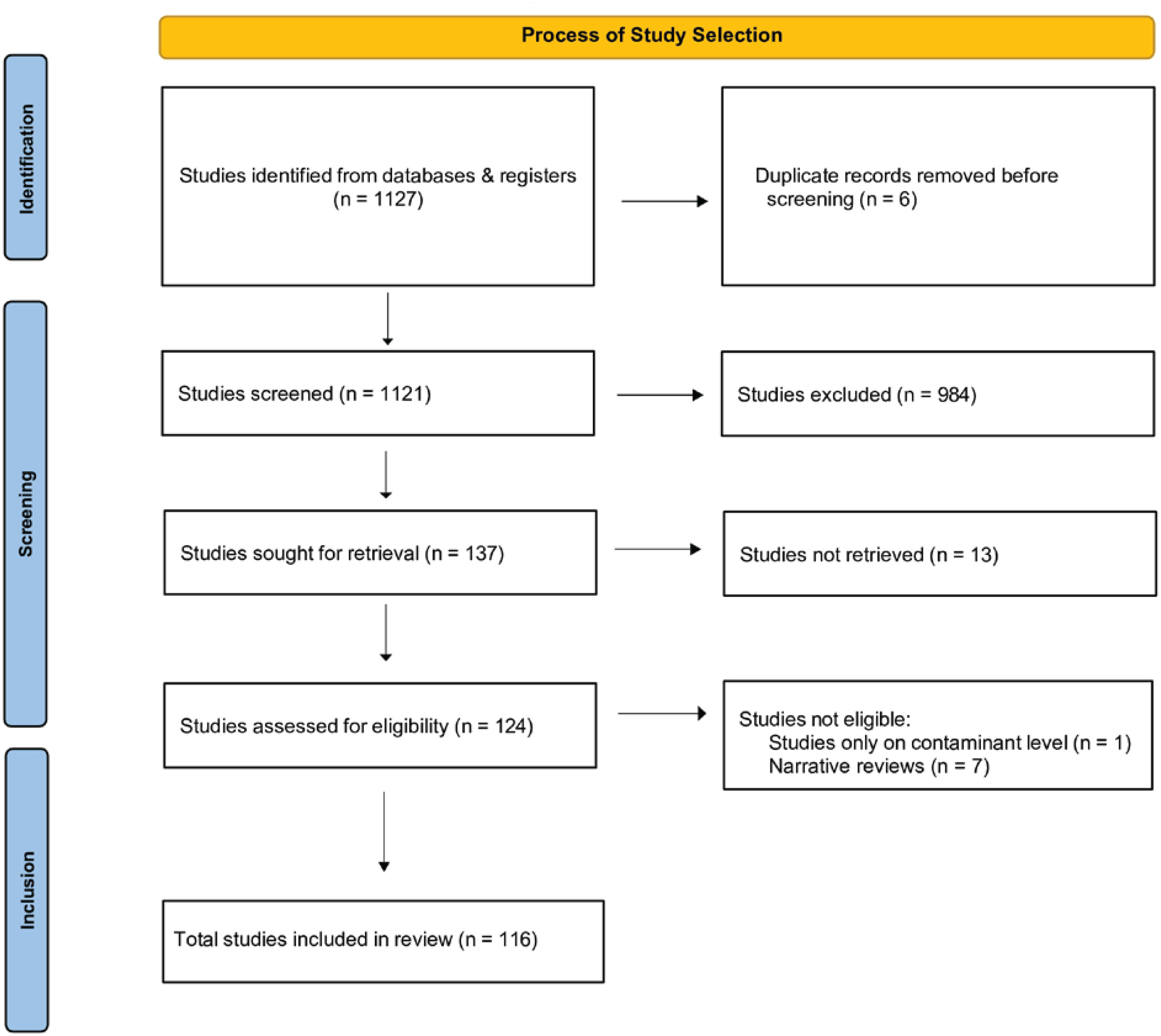
We identified 1127 articles through our literature review. After de-duplicating the sample, we screened 1121 articles for relevance, finding 137 eligible for full text review, 116 of which were included in our full analysis22-137 (Figure 1; and Supplementary file Table 2).
Figure 1
Flow diagram showing study identification, screening, eligibility assessment, and inclusion of experimental studies evaluating the environmental toxicity of over-the-counter (OTC) drugs on aquatic organisms. Total included studies: n = 116 (Search conducted up to December 2024)
The number of articles published on the environmental toxicity of OTC drugs has grown over time, especially over the last decade. The highest number of studies were available for hormonal contraceptives22-78, followed by analgesics79-95 and topical antifungals96-108 (Table 1). The search yield was low for antidiarrheals, laxatives, topical steroids, skincare products, and ophthalmic products, and no relevant studies could be selected from these drug classes.
Table 1
Time-wise distribution of included experimental studies (N=116) assessing the environmental toxicity of over-the-counter (OTC) drug classes on aquatic organisms. Data are grouped by decade (1990–2000, 2001–2010, 2011–2020, 2021–December 2024)
| Over-the-counter drug class | 1990–2000 | 2001–2010 | 2011–2020 | 2021–present | Total |
|---|---|---|---|---|---|
| Overall22-137 | 1 | 12 | 86 | 18 | 116 |
| Analgesics79-95 | 0 | 1 | 12 | 4 | 17 |
| Antacids122,128 | 0 | 1 | 1 | 0 | 2 |
| Antiemetics123 | 0 | 1 | 0 | 0 | 1 |
| Antiallergics109,113,114,120,124 | 0 | 0 | 5 | 0 | 5 |
| Cough and Cold129,137 | 0 | 0 | 2 | 0 | 2 |
| Vitamins & Minerals125 | 0 | 0 | 1 | 0 | 1 |
| Hormonal Contraceptives22-78 | 1 | 6 | 41 | 9 | 57 |
| Antiseptics110-112,126,127,130,131 | 0 | 0 | 5 | 2 | 7 |
| Topical Antifungals96-108 | 0 | 1 | 11 | 1 | 13 |
| Topical Antimicrobials121,132 | 0 | 1 | 1 | 0 | 2 |
| Piles and Wart Remedies115-119,133-136 | 0 | 0 | 7 | 2 | 9 |
Overall, the highest number of studies included were found to be conducted in the USA (n=23)30,31,35.36,38-40,54,57,58,61,63,65.67,70,73,75,76,78,109-112, followed by Portugal (n=18) 27,29,45,47,69,87,92,94,95,98,103,113-119 and China (n=12)25,26,32,62,77,80,85 ,93,106,107,120,121. In all the mentioned countries, most of the studies belonged to hormonal contraceptives class22-78 (Supplementary file Table 3).
Nearly all the studies included in the analysis were found to be experimental in nature, with the majority of them being in vivo (n=59)22-24,26,27,29-31,34,36,39,42,47,48,54,56,58,63,66,67,69-72,77,79,80,82-95,97,101,102,104,106,107,109,113,114,117,119,120,122-127, followed by in vitro (n=52)25,32,33,35.37,38,40,41,43-45,49-53,55,57,59-62,64,65,68,73-75,78,96,98,100,103,105,108,110-112,115,116,118,121,128-136 and a few both in vivo and in vitro (n=5)28,46,76,81,137. One study was found to be observational99.
Drugs studied
Most studies were conducted using 17α-ethinylestradiol as the test drug (n=43)22-68,70,97. Drugs studied under each OTC class are listed in Table 2.
Table 2
Test drugs used in the included experimental studies (N=116) evaluating toxicity of over-the-counter (OTC) drugs on aquatic organisms (numbers in parentheses indicate the number of studies in which each drug was tested)
| Over-the-counter drug class | Drugs studied |
|---|---|
| Analgesics | Diclofenac (n=9)60,79,83,86,90,91,95,99,116, Paracetamol (n=7)80,82,87,92,94,95,128, Ibuprofen (n=6)78,80,88,89,93,128, Naproxen (n=3)33,81,85, Aspirin (n=2)37,84, Diclofenac-Ibuprofen mixture (n=1)86, 4-Hydroxydiclofenac (n=1)91 |
| Antacids | Ranitidine (n=1)122, Omeprazole (n=1)128 |
| Antiemetics | Cyclizine (n=1)123, Prochlorperazine (n=1)123 |
| Antiallergics | Diphenhydramine (n=2)109,120, Cetirizine (n=2)113,114, Loratadine (n=1)124, Desloratadine (n=1)124 |
| Cough and Cold | Codeine (n=1)129, Ephedrine (n=1)137 |
| Vitamins & Minerals | Vitamin C (n=1)125 |
| Hormonal Contraceptives | 17α-ethinylestradiol (n=43)22-68,70,97, Levonorgestrel (n=10)30,68-76, 17β-Estradiol (n=4)32,51,68,106, Norethindrone (n=3)74,77,78, Drosperinone (n=3)46,72,74, Desogestrel (n=1)72, Gestodene (n=1)72, Cyproterone acetate (n=1)74 |
| Antiseptics | Triclosan (n=4)100,110,111,128, Povidone-iodine (n=2)126,127, Phenol (n=1)130, Chloroxylenol (n=1)131, Chlorhexidine (n=1)112 |
| Topical Antifungals | Clotrimazole (n=9)96-104, Ketoconazole (n=5)96,105-108, Econazole (n=1)96, Miconazole (n=1)96 |
| Topical Antimicrobials | Neomycin (n=2)99,121 |
| Piles and Wart Remedies | Salicylic acid (n=8)115-119,134-136, Zinc sulphate (n=1)133 |
Sample utilized
Most studies utilized artificially created aquatic test drug exposure to organisms (n=109)1-21,23-50,53-95,97,98,100-128,130-136. However, some studies used serial dilutions of samples taken from wastewater treatment plants (WWTP), i.e. wastewater effluent (n=4)52,96,99,129, river water (n=2)51,137, and groundwater (n=1)22.
Organisms studied
Overall, a total of 147 organisms were studied in the 116 included studies. Of these, fish were used as the test organism most number of times (n=63)23,26,28,30-32,34-36,38-42,44-50,54-58,61-67,69-79,85,86,90,94,96,109,101,102,104,106,107,110,120,125-127,132,133, followed by crustaceans (n=23)29,37,51,60,80,84,89,93,95,96,103,105,109,122-124,132,137, algae (n=19)25,43,52,53,68,96,100,108,111,112,124,128,135-137, molluscs (n=13)24,27,41,59,79,87,91,113-115,117,119,134, aquatic plants (n=10)79-83,98,109,116,129,130, aquatic insects (n=3)83,99,120, fungi (n=1)131, bacteria (n=4)82,112,121,132, aquatic worms (n=4) 22,92,99,118, echinoderms (n=2)37,41, and some other organisms like Tetrahymena, Hydra, leech, eel, frog, and harbor seal (n=8)33,81,83,96,97,122,124,137.
Organisms frequently tested are mentioned below. Among fish, the commonly studied species included Danio rerio/Zebrafish (n=19)26,28,34,35,45-48,57,63-65,69,71,77,85,110,133, Pimephales promelas/ Fathead minnow (n=8)54,61,67,72,73,75,78,109, Cyprinus carpio (n=5)74,86,90,104,126, Carrasius auratus (n=4)106,107,120,127, Gasterosteus aculeatus (n=2)50,58, Menidia beryllina (n=3)30,36,70, Oncorhynchus mykiss (n=3)49,66,101, Oryzias latipes (n=2)31,38, Clarias gariepinus (n=2)56,102. Among crustaceans, Daphnia species (D. magna and D. similis) were most frequently used (n=16)29,51,60,80,84,89,93,95,96,103,105,109,112,131,132,137. Algal models included Pseudokirchneriella subcapitata (n=5)108,112,124,136,137 and Dunaliella salina (n=2)43,135. Molluscs comprised Mytilus species (M. galloproviancialis and M. trossulus; n=7)24,41,91,113,117,119,134 and Ruditapes philippinarum (n=3)27,87,114. Aquatic plants studied were Lemna species (L. minor, L. gibba and L. paucicostata; n=5)98,109,116,129,130. Bacterial assays employed Vibrio fischeri (n=2)112,132 and Vibrio qinghaiensis (n=1)121, while aquatic worms included Hediste diversicolor (n=2)92,118.
Zebrafish (Danio rerio) was the most frequently studied organism in in vivo studies (n=9)26,34,48,63,69,71,77,85,133, in vitro studies (n=8)35,43-45,57,64,65,110 and in studies following both in vitro and in vivo design (n=2)28,46. Daphnia sp. were next to zebrafish in being the most frequently studied organism in in vivo (n=7)29,80,84,89,93,95,109 and in vitro (n=8)51,60,96,103,105,112,131 ,132 studies and in studies following both in vitro and in vivo design (n=1)137.
Drug concentration range
The concentration ranges of various drugs used for exposure to organisms have been listed in Table 3 after compiling the data used in the included studies.
Table 3
Concentration ranges of drugs tested in included experimental studies and assessment of effects at environmentally relevant concentrations (N=116)
| Drug | Concentration range across studies | Whether the effects of ng/L or µg/ L concentrations investigated in studies |
|---|---|---|
| Diclofenac60,79,80,83,86,90,91,95,99,116 | 0.1–100 mg/L | Yes |
| Naproxen33,81,85 | 42.5–115.2 mg/L | No |
| Paracetamol80,82,87,92,94,95,128 | 0–150 mg/L | Yes |
| Aspirin37,84 | 5 µg/L–500 mg/L | Yes |
| Ibuprofen78,80,86,88,89,93,128 | 0–80 mg/L | Yes |
| Ranitidine122 | 0–100 mg/L | Yes |
| Omeprazole128 | 80–140 mg/L | No |
| Cyclizine123 | 2–100 mg/L | Yes |
| Prochlorperazine123 | 2–100 mg/L | Yes |
| Diphenhydramine109,120 | 0.8 µg/L–10 mg/L | Yes |
| Cetirizine113,114 | 0–12 µg/L | Yes |
| Loratadine124 | 0.09–100 mg/L | Yes |
| Codeine129 | 1–2500 µg/L | Yes |
| Ephedrine137 | 0–1000 mg/L | Yes |
| Vitamin C125 | 100–400 mg/L | No |
| 17α-ethinylestradiol22-68,70,97 | 1 ng/L–100 mg/L | Yes |
| Levonorgestrel30,68-76 | 0.06–125 ng/L | Yes |
| 17β-Estradiol32,51,68,106 | 0.1–10 µg/L to 5 mg/L | Yes |
| Norethindrone74,77,78 | 0–398.6 ng/L | Yes |
| Drosperinone46,72,74 | 100 ng/L | Yes |
| Desogestrel72 | 1–100 ng/L | Yes |
| Gestodene72 | 1–100 ng/L | Yes |
| Cyproterone acetate74 | 500 µM | Yes |
| Triclosan100,110,111,128 | 1–200 µg/L | Yes |
| Povidone-iodine126,127 | 0–240 mg/L | Yes |
| Phenol130 | 11.38 and 22.76 μM | Yes |
| Chloroxylenol131 | 50 mg/L | No |
| Chlorhexidine112 | 900 µg/L | Yes |
| Clotrimazole96-104 | 0–14.63 µg/L | Yes |
| Ketoconazole96,105-108 | 0–10 µg/L | Yes |
| Econazole96 | 4.8–20.1 ng/L | Yes |
| Miconazole96 | 7.9–16.7 ng/L | Yes |
| Neomycin99,121 | 11.2 µmol/L | Yes |
| Salicylic Acid115-119,134-136 | 5–125 µg/L | Yes |
| Zinc Sulphate133 | 0.6–619 µmol/L | Yes |
It was also documented whether the effects of environmentally relevant concentrations, which are usually in the range of ng/L or µg/ L, were investigated in these studies. A paucity of studies investigating environmentally relevant dose effects was observed for naproxen, omeprazole, vitamin C, and chloroxylenol. In these drugs, higher concentrations in the range of mg/L were investigated (Table 3).
Outcome patterns
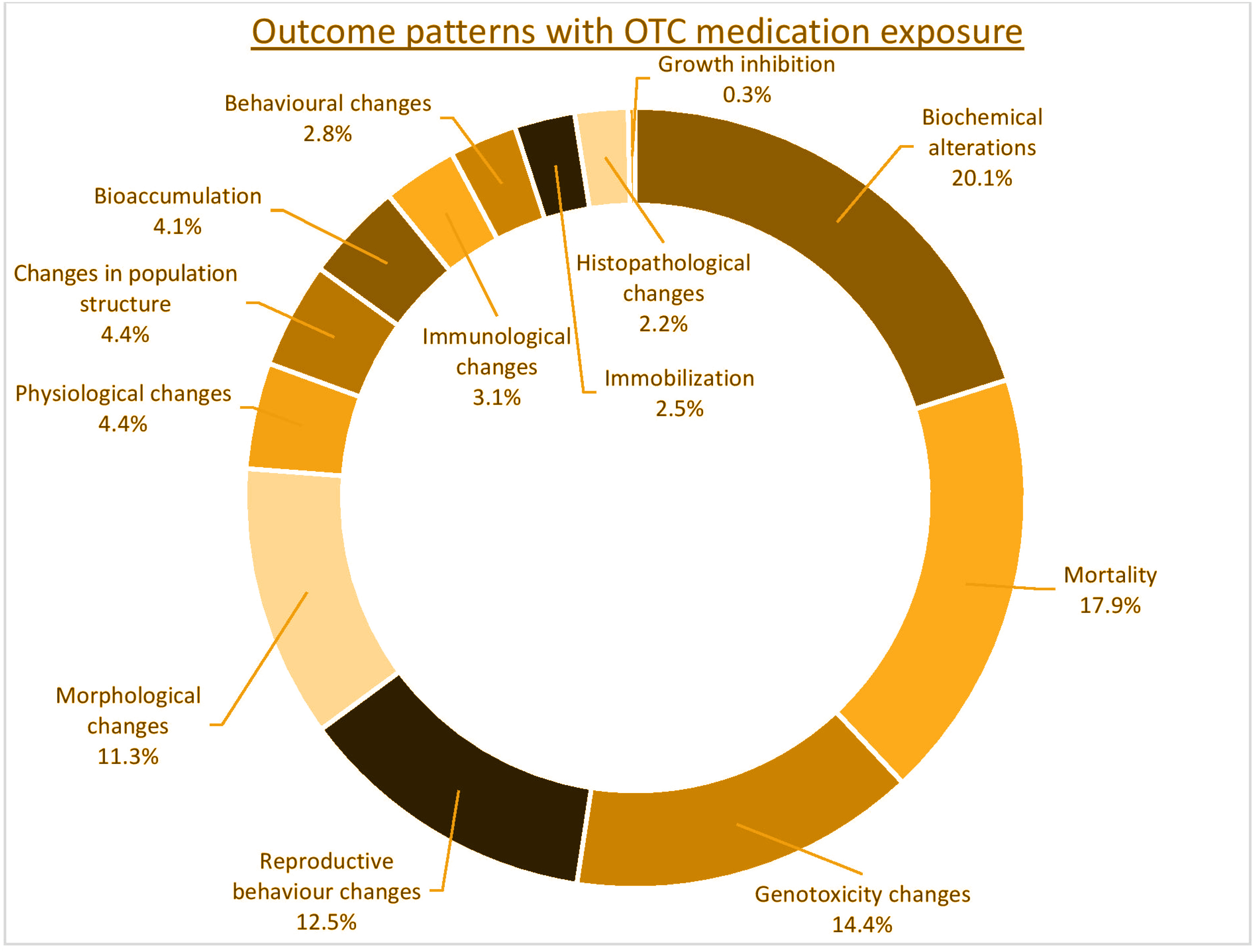
Analysis revealed a total of 319 outcome patterns. Of these, the most frequently observed outcome with OTC medication exposure was biochemical alteration (20.1% of all reported outcomes, n=64)24,25,27,29,43,46,51,57,62,69,72-74,77,81-83,86-92,94-98,100-103,105-107,110-114-120,125,128-131,134,135. Mortality (17.9%; n=41)23,26,29,30,35,37,39,46,51,54,56,62,72,73,76,78-82,84-86,88-91,94,96,109,110,112,114,122-124,128,137, genotoxicity changes (14.4%; n=37)23-26,28-31,34,35,42-44,46,49,51,54,56,58,59,61,70,72,73,76,77,79,81,86,88,89,104,106,107,117,122,131,133,134, morphological changes (13.2%; n=33) 23,25,26,28-31,35,39,51,54,56,60,62,70,72,73,76,78,80,81,85,89,91,93,101,102,110,125,128-130, reproductive behavior changes (11.3%; n=27)26,29,30,34,35, 37,39,41,51,56,59,60,62,69,70,72,73,77,80,85,89,91,93,97,105,109,110, physiological changes (10.1%; n=18)24,25,29,43,51,54,56,84,85,101,102,110,113,114,119,128,129 ,134, bioaccumulation (n=9)32,53,99,101,104,106,120,125,134, changes in population structure (n=9)26,29,34,35,51,70,89,93,97, histopathological changes (n=8)56,62,77,97,101,126,127,134, immunological changes (n=6)26,30,33,70,79,88 , behavioral changes (n=6)23,58,77,84,109,120, immobilization (n=3)68,136,137, and growth inhibition (n=2)108,128 were other notable outcomes. Outcomes observed have been depicted in Figure 2.
Figure 2
Distribution of included experimental studies (n = 116) by study design assessing the toxicity of over-the-counter (OTC) drugs in aquatic organisms
Highest number of outcome patterns were reported with 17α-ethinylestradiol (28.2% of all reported outcomes, n=90)22-68,70,97. Details of drug-wise effects observed are presented in Table 4.
Table 4
Drug-wise outcome patterns reported in included experimental studies (N=116) assessing the toxicity of over-the-counter (OTC) drugs in aquatic organisms (number displayed in parenthesis is the number of studies in which the corresponding outcome pattern was observed)
| Drug | Outcome patterns |
|---|---|
| Diclofenac60,79,80,83,86,90,91,95,99,116 |
|
| Naproxen33,81,85 |
|
| Paracetamol80,82,87,92,94,95,128 |
|
| Aspirin37,84 | |
| Ibuprofen78,80,86,88,89,93,128 |
|
| Ranitidine122 | |
| Omeprazole128 | |
| Cyclizine123 |
|
| Prochlorperazine123 |
|
| Diphenhydramine109,120 |
|
| Cetirizine113,114 | |
| Loratadine124 | |
| Codeine129 | |
| Ephedrine137 | |
| Vitamin C125 | |
| 17α-ethinylestradiol22-68,70,97 |
|
| Levonorgestrel30,68-76 |
|
| 17β-Estradiol32,51,68,106 | |
| Norethindrone74,77,78 | |
| Drosperinone46,72,74 | |
| Desogestrel72 | |
| Gestodene72 | |
| Cyproterone acetate74 |
|
| Triclosan100,110,111,128 | |
| Povidone-iodine126,127 | |
| Phenol130 | |
| Chloroxylenol131 | |
| Chlorhexidine112 | |
| Clotrimazole96-104 |
|
| Ketoconazole96,105-108 | |
| Salicylic Acid115-119,134-136 |
|
| Zinc Sulphate133 |
|
DISCUSSION
This systematic review highlights the current landscape of environmental toxicity research concerning OTC medications, emphasizing the growing global attention toward their ecological impact, particularly over the last two decades. This is in keeping with the rise in the use of medications by the general population however, without an association to overall better health of the community. This increased demand corroborates with the surge in global sales of OTC pharmaceuticals in recent times of COVID and post COVID era16. With 116 studies included, our review demonstrates an increasing body of literature focusing on hormonal contraceptives, analgesics, and topical antifungals, while exposing a significant paucity of studies in other common OTC drug classes such as antidiarrheals, laxatives, topical steroids, and skincare and ophthalmic products.
The reported global statistics of OTC market at an estimate of US$ 157 billion in 2021, which is expected to increase at a 5.8% compound annual growth rate (CAGR) to reach US$ 233 billion by 2028 supports the growing usage138. In past sales reports have suggested that countries like the United States, Japan, Germany, and the United Kingdom followed by Asian countries, Middle East and Africa contribute maximally to the worldwide OTC sales139.
Overall, the USA had the greatest number of included studies, followed by Portugal and China. This is probably because despite the global coverage, pronounced regional patterns in the intensity of environmental monitoring efforts prevail. According to a previous study, roughly 3 out of 4 database entries originate from western Europe140.
We noticed an imbalance in the types of OTC medications being studied. Classes such as antidiarrheals, laxatives, antacids, and antihistamines remain significantly underexplored despite their widespread use and excretion into wastewater systems. These classes yielded a low search rate in our review. This is despite the fact that the cough and cold remedies segment lead the sales, followed by analgesics, and vitamins and minerals segment. The digestive and intestinal remedies, skin treatments and other segments are expected to pick up the pace141. Moreover, there is an unmet need of good quality ecotoxicity studies with respect to topical steroids, skin care products, ophthalmic medications, cough and cold remedies and vitamins and minerals even as they hold a significant chunk of market share.
Previously, a few narrative and systematic reviews have focused on a single class of drugs affecting the environment13,14. The present study could be considered as one of the first attempts to systematically review the impact of several classes of common over-the-counter drugs on aquatic organisms. The highest number of studies in the present review were available for hormonal contraceptives, followed by analgesics and topical antifungals. The analgesics segment, as we are aware, is among the classes of OTC drugs that have been researched the most in relation to environmental pollution and this may also be related to its significant global market share 12,141.
We found that there has been a sharp increase in studies based on environmental pollution by pharmaceuticals, including OTC drugs, since 2011, suggesting rising environmental and scientific concern around the ecological footprint of pharmaceutical residues, especially those found in wastewater effluents. The predominance of studies from the USA, Portugal, and China, all with a focus on hormonal contraceptives, may reflect both the research infrastructure in these countries and the global prioritization of endocrine-disrupting compounds like 17α-ethinylestradiol, which was the most commonly studied drug. However, there is an evident underrepresentation of other hormonal agents like levonorgestrel, norethindrone, and cyproterone acetate, which also demonstrated presence in environmental matrices. This suggests a potential research bias and highlights the need for broader exploration across a range of hormonal compounds. Few reports have also suggested that a mixture of drugs, including hormonal compounds, poses a greater threat to the aquatic environment via drug synergism142. Likewise, while antiseptics like triclosan have received substantial attention, other compounds, such as chloroxylenol, have not been studied at environmentally relevant concentrations, raising concerns about knowledge gaps in evaluating their true ecological risk.
Most included studies utilized experimental designs, primarily in vivo, with a wide array of aquatic organisms serving as bioindicators. Zebrafish (Danio rerio) and Daphnia spp. were the most frequently used organisms, underscoring their established utility in ecotoxicological assessments due to their sensitivity, ease of use, and relevance to aquatic ecosystems. However, the ecological representation could be broadened with further inclusion of microbial and plant species, which were comparatively underrepresented.
Importantly, although many studies assessed drug exposures at environmentally relevant concentrations (ng/L or µg/L), some drugs such as naproxen, omeprazole, vitamin C, and chloroxylenol were often tested only at mg/L levels, which may not reflect realistic environmental exposure scenarios. This gap underscores the need for future studies to include dose ranges that more accurately simulate actual aquatic contamination levels to assess chronic low-dose effects, especially considering the bioaccumulation and mixture toxicity potential of these compounds.
Strengths and limitations
While our review has several strengths, such as following a rigorous systematic approach to extract and analyze data across several classes of drugs for the first time, there are also a few limitations we identify with this study. As for a systematic review, data for only published studies could be taken, negative or neutral; the likely unpublished studies could not be taken into account, resulting in a publication bias. Owing to the heterogeneity of aquatic species taken in this study, we did not include the extraction of data pertaining to test design, test substance, and statistical design of individual studies in our methodology protocol. Hence, we refrain from reporting on the quality assessment of the studies included in our review. This review did not search for articles in languages other than English, and this may have resulted in a language bias. Conference abstracts were excluded due to insufficient extractable data. Additionally, information on the characteristics we were abstracting about drug abandonment and repurposing may not have been published in the medical or pharmaceutical peer-review literature and may have been missed.
CONCLUSIONS
Overall, the findings of this systematic review point toward the necessity of expanding the scope of ecotoxicological assessments for OTC drugs, both in terms of drug classes and environmental realism. This review shows that aquatic life is surely at risk for exposure to pharmaceuticals as they come directly in contact with waste water effluents for prolonged periods and we cannot ignore the entry of such chemicals into the food chain. Most commonly studied OTC pharmaceuticals, like hormonal and analgesic compounds, exhibit measurable toxic effects on aquatic organisms even at trace levels. Biochemical alterations (20.1%), mortality (17.9%), genotoxicity (14.4%), reproductive behavior changes (12.5%), morphological and immunological variations have been noted with a variety of pharmaceuticals. There is a need of greater focus on inclusion of mixture toxicity studies to evaluate synergistic or antagonistic effects of multiple drugs concurrently present in aquatic environments. Only a handful of studies actually sampled wastewater and river water samples. Future research should also consider regional variations in drug usage, wastewater treatment infrastructure, and ecological vulnerability to develop more locally relevant environmental risk assessments. ultimately informing regulatory frameworks and wastewater management practices.